

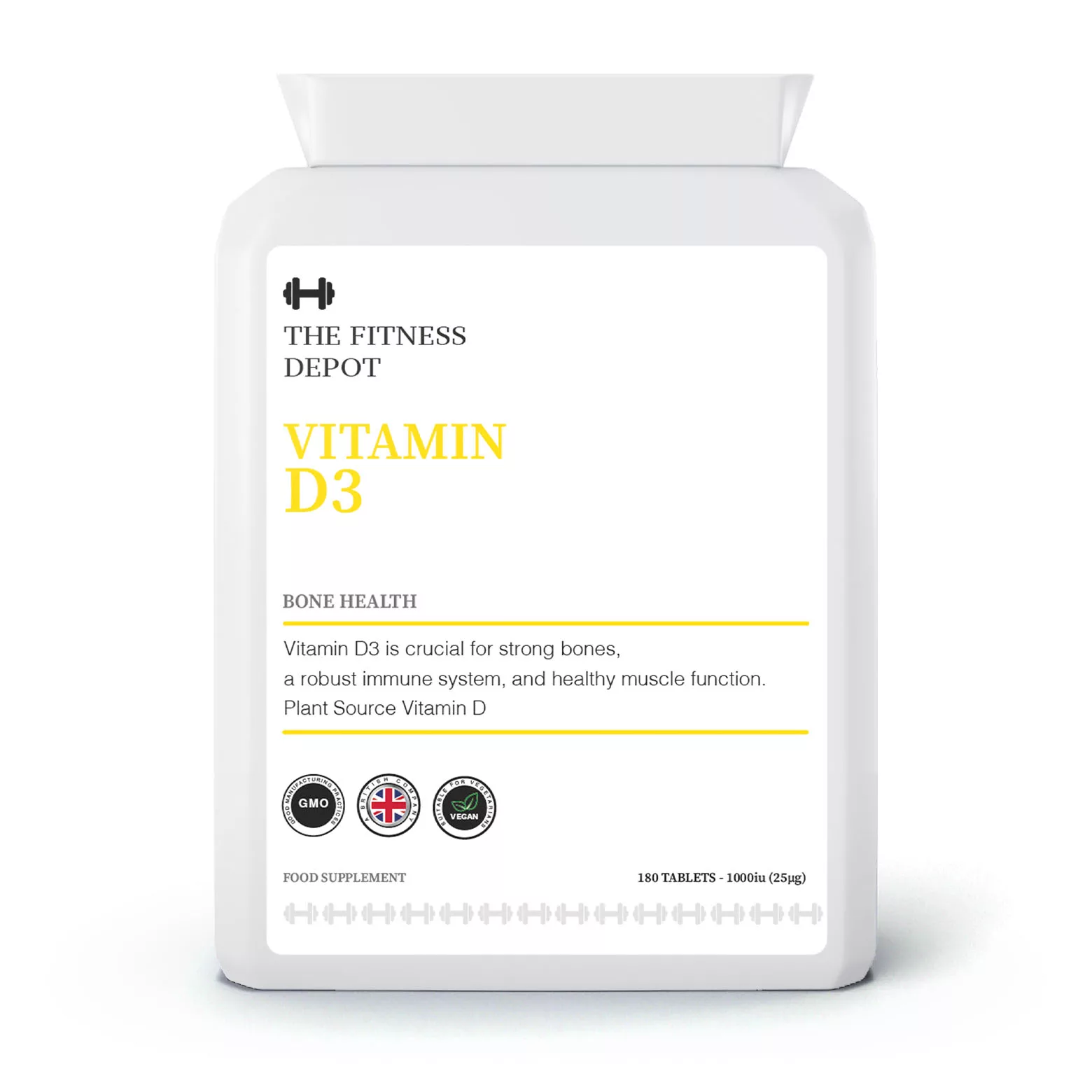
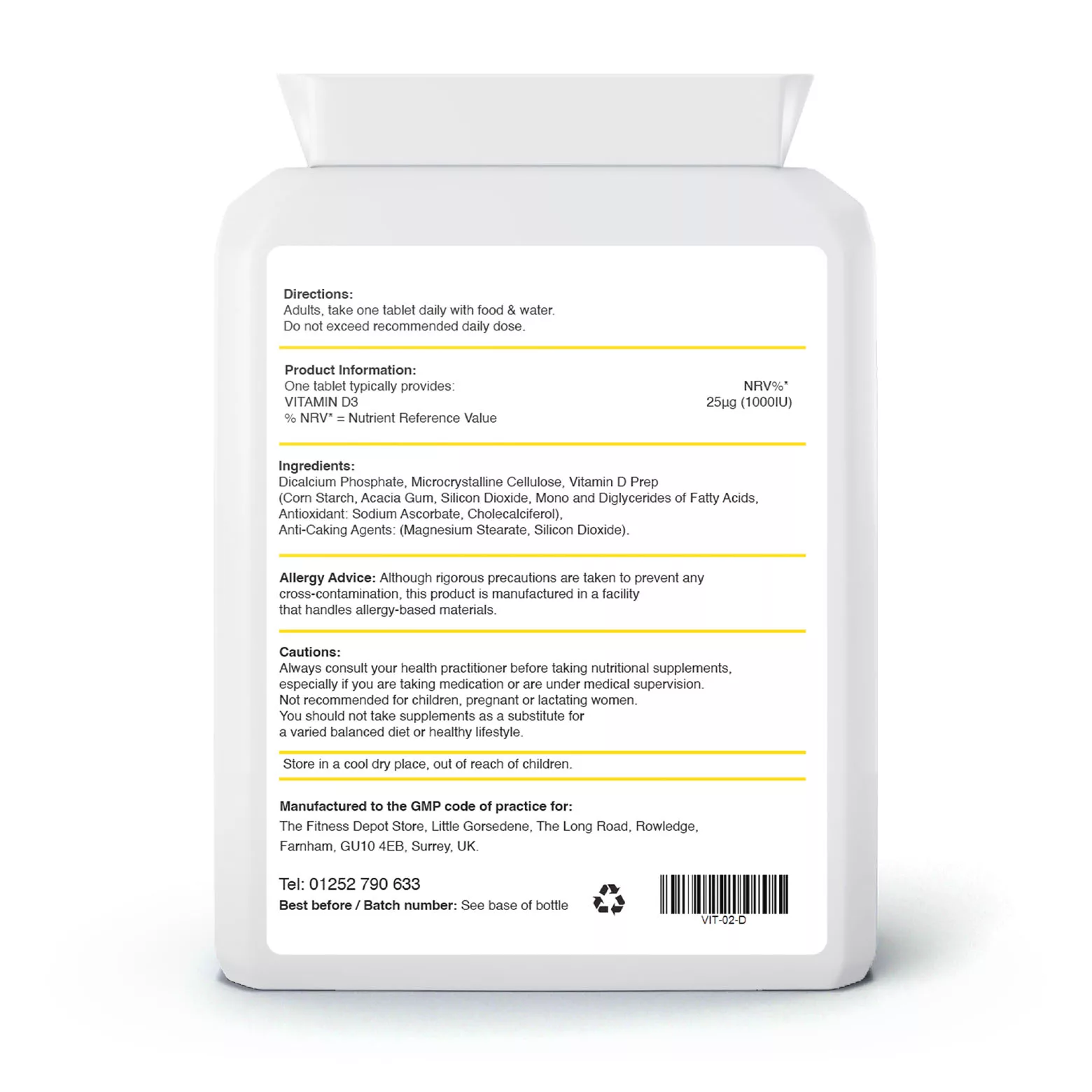
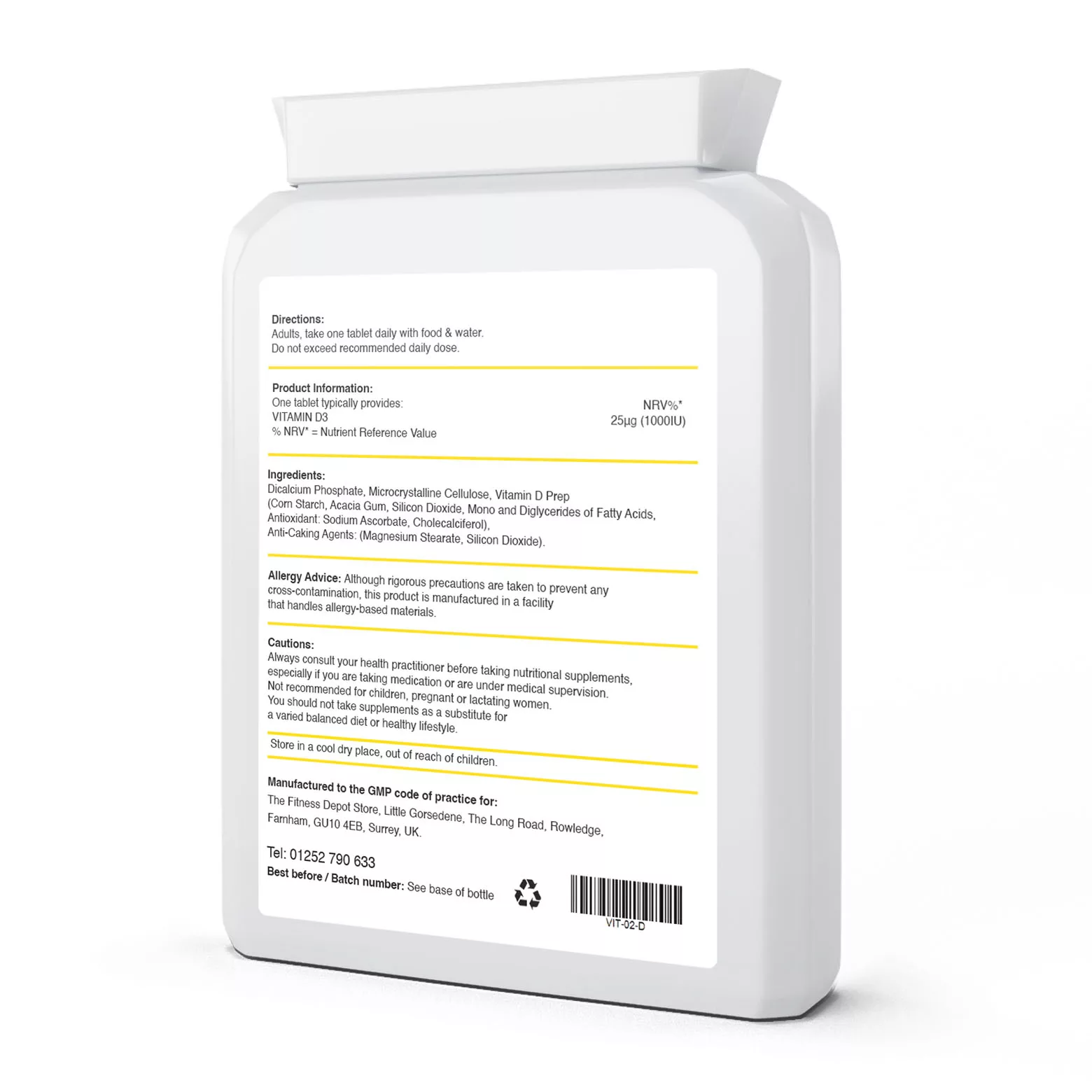




Description
-
Clinical Benefits (Science-Backed):
🛡️ Immune Function Enhancement
- Activates T-cells and macrophages (key immune defenders)
- Sufficient D3 reduces respiratory infection risk by 42%
- Reduces flu and cold incidence by 40% in the winter months
- Enhances antimicrobial peptide production (cathelicidin) by 300%
🦴 Bone Density & Fracture Prevention
- Increases intestinal calcium absorption from 10-15% to 30-40%
- Reduces hip fracture risk by 20% and non-vertebral fractures by 23%
- Essential for bone remodelling; deficiency causes osteomalacia (bone softening)
- Reduces falls in the elderly by 23% through improved muscle strength
💪 Muscle Strength & Function
- Vitamin D receptors present in skeletal muscle tissue
- Supplementation increases muscle strength by 10-15% in deficient individuals
- Reduces fall risk by improving balance and neuromuscular coordination
- Enhances muscle protein synthesis when combined with resistance training
😊 Mood & Mental Health
- Vitamin D receptors abundant in brain regions regulating mood
- Deficiency increases depression risk by 2-fold
- 4000 IU daily reduces seasonal affective disorder (SAD) symptoms by 40%
- Improves overall wellbeing scores by 25% in deficient populations
❤️ Cardiovascular Health
- Reduces hypertension risk by 30%; supplementation lowers BP by 2-6 mmHg
- Improves endothelial function and arterial stiffness
- Reduces cardiovascular disease risk by 10% for each 10 ng/mL increase in blood levels
- Regulates renin-angiotensin system (blood pressure control)
🧠 Cognitive Function
- Low D3 associated with 2.3x increased dementia risk
- Improves cognitive processing speed and executive function
- Neuroprotective effects against age-related cognitive decline
- Supports neuroplasticity and synaptic function
🦠 Autoimmune Disease Modulation
- Reduces multiple sclerosis risk by 40% with adequate D3 levels
- Decreases autoimmune disease progression and symptom severity
- Regulates immune tolerance, preventing over-active immune response
- Reduces inflammatory markers (CRP, IL-6) by 20-30%
☀️ UK-Specific Necessity
- 40% of UK adults have insufficient D3 levels in winter
- October-March: sun angle too low for adequate cutaneous synthesis (below 42° latitude)
- Darker skin requires 3-6x longer sun exposure for equivalent D3 production
- Indoor workers produce minimal D3 even in summer months
Clinical Evidence:
- Public Health England officially recommends 10µg (400 IU) daily for all UK residents
- VITAL study: 2000 IU daily reduces cancer mortality by 17%
- Vitamin D3 raises blood levels 2.5x more effectively than D2
- Lichen-derived D3 bioequivalent to animal-derived forms





Dylan (verified owner) –
Website is easy to use and delivery was super fast!